
When people compare countertop materials, the first question is almost always the same: how long will it actually last? For quartz, the short answer is a long time — but the exact number depends on how you use the kitchen and what you do (or do not do) to protect the surface.
This guide explains the durability of quartz countertops honestly: real lifespan, what quartz handles well, what can damage it, and how to make yours last as long as possible.
Quick answer: Engineered quartz countertops typically last 25 to 50 years or more with basic care. They resist scratches and most stains, do not need sealing, and hold up to daily cooking. Their weak points are direct high heat, prolonged UV exposure, and harsh chemical cleaners.
How Long Do Quartz Countertops Actually Last?
Most manufacturers list quartz as a lifetime countertop, and in practice a well-installed quartz surface will still look and perform well 25 to 50 years later — often longer. The number is not a strict expiration date; it is an estimate of when the finish, edge profile, or resin binder may start showing wear that a homeowner would want to address.
Two things drive real-world lifespan: how the countertop is used (heavy daily cooking versus light use) and what it is protected from (hot pans, direct sunlight, and aggressive cleaners). Learn more: can quartz countertops burn?
What Quartz Is Made From (and Why That Matters for Durability)
“Quartz countertops” are engineered surfaces, not pure natural stone. A finished slab is roughly 90–95% ground natural quartz combined with 5–10% polymer resins and pigments, then molded and cured into slabs under heat and pressure. Brands like Cambria, Silestone, Caesarstone, and MSI Q Premium all use this process.
The resin is what makes quartz non-porous — liquids cannot soak in, which is why quartz never needs sealing. But the same resin is also the material’s Achilles heel: it is heat-sensitive, and very high temperatures can scorch or discolor it.
Scratch, Heat, and Stain Resistance: What the Numbers Really Mean
Scratches
Quartz scores about 7 on the Mohs hardness scale — harder than most kitchen knives, so casual cutting on the surface will not leave visible marks. However, dropping heavy sharp objects (a chef’s knife point-first) or dragging cast iron across an edge can chip the finish. Use cutting boards — not because quartz cannot handle a knife, but because your blades will dull faster and one bad drop can chip a corner.
Heat
Quartz handles moderate heat (hot coffee cups, warm dishes) with no issue. The problem is direct, prolonged heat: setting a pan straight from a hot burner onto quartz can scorch the resin, leaving a permanent yellow or brown mark. Most quartz warranties explicitly exclude heat damage. Always use trivets for anything coming off the stove or out of the oven.
Stains
Because quartz is non-porous, it resists staining better than granite, marble, and quartzite. Wine, coffee, tomato sauce, and cooking oils wipe off cleanly if addressed within a reasonable time. The exception is strongly pigmented substances — turmeric, some hair dyes, permanent markers — which can leave marks if left sitting for hours. Wipe promptly and quartz stays clean. See our quartz care and maintenance guide.
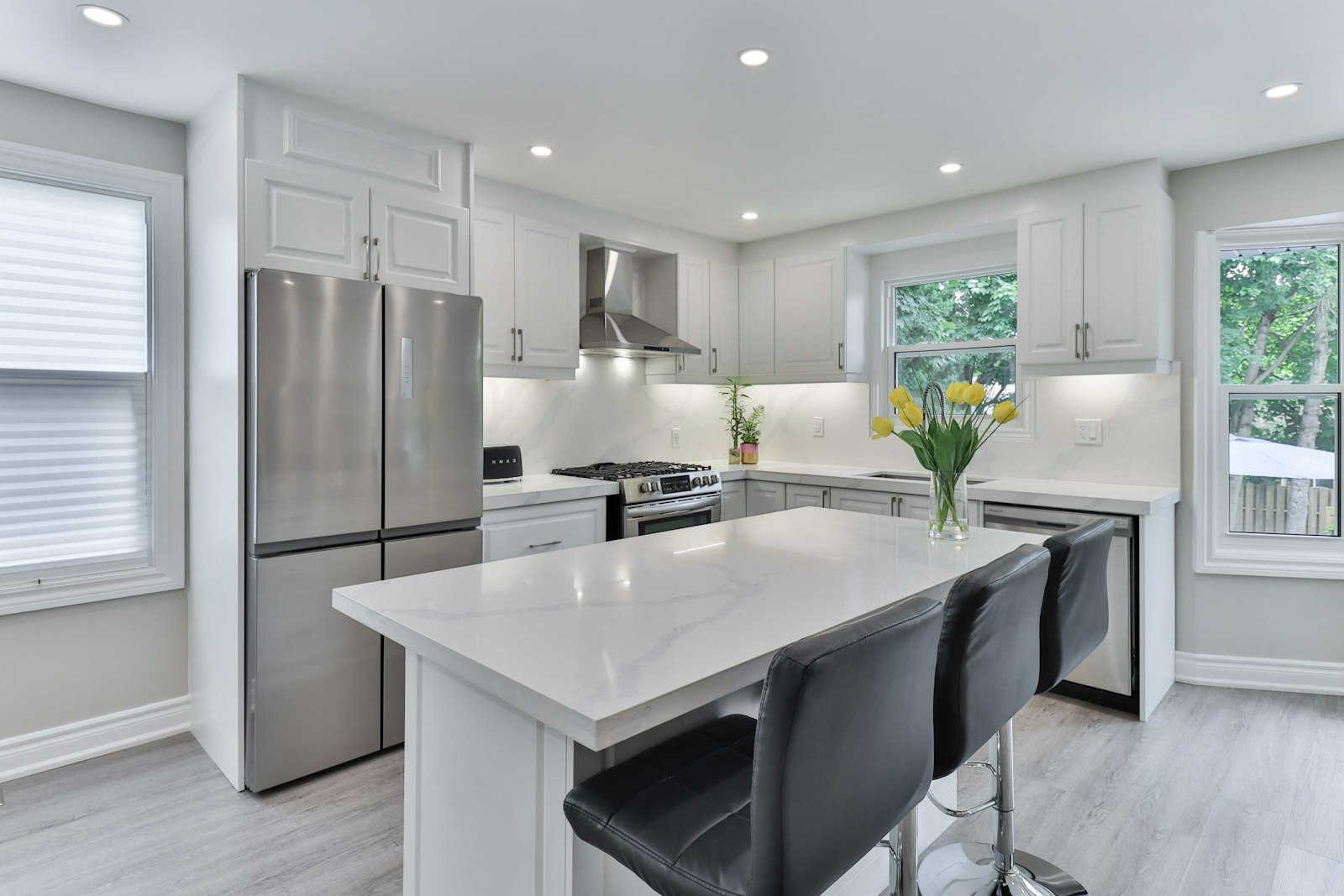
What Actually Damages Quartz Countertops
Even a very durable countertop has weak points. For quartz, the main threats are:
- Direct high heat. Hot pans placed straight on the surface can scorch the resin, leaving permanent discoloration. Trivets solve this completely.
- Direct UV exposure over time. Some quartz products yellow or fade if placed in direct sunlight for years. That is why most manufacturers do not recommend quartz for outdoor kitchens.
- Harsh chemical cleaners. Bleach, ammonia-based products, oven cleaners, and strong acids can degrade the resin binder over time. Stick to mild dish soap or pH-neutral stone cleaners.
- Extreme thermal shock. A very cold pan placed on a hot surface (or the other way around) can, in rare cases, cause hairline cracks near seams.
How to Make Your Quartz Countertops Last Longer
Everyday habits matter more than any single product:
- Use trivets and hot pads for anything hotter than a warm dish.
- Use cutting boards — protects both the surface and your knife edges.
- Clean with mild dish soap and warm water, or a pH-neutral stone cleaner. Rinse and dry.
- Wipe spills promptly, especially strongly pigmented substances.
- Skip harsh chemicals — no bleach, ammonia, oven cleaner, or acidic descalers.
- Avoid sitting or standing on the countertop — stress at seams and near unsupported edges can crack it.
Quartz vs Granite vs Marble: A Quick Durability Comparison
| Material | Hardness | Heat resistance | Staining risk | Sealing |
|---|---|---|---|---|
| Quartz (engineered) | Very high — 7 Mohs | Moderate — resin can scorch | Very low — non-porous | Never |
| Granite (natural) | High — 6–6.5 Mohs | High — handles direct heat well | Low with sealing | ~1× per year |
| Quartzite (natural) | Higher — 7 Mohs | High — no resin | Low with sealing | ~1× per year |
| Marble (natural) | Lower — 3–4 Mohs | Good, but etches with acid | High — soft & porous | ~1–2× per year |
If marble is on your list, remember it is the softest of the four and etches from acidic spills like wine, coffee, and citrus. Would you like to see the marble options at Maranatha? Click here.
Frequently Asked Questions
Do quartz countertops need to be sealed?
No. Engineered quartz is non-porous — the resin fills every gap between quartz particles, so sealer would not soak in and would not do anything useful.
Can hot pans damage quartz?
Yes, if placed directly from a hot burner or oven. The resin binder can scorch, leaving a permanent yellow or brown mark. Use trivets or hot pads for anything hotter than a warm dish.
How long do quartz countertops last compared to granite?
Both are effectively lifetime materials in typical residential use — 25 to 50+ years is realistic for either. Granite handles direct heat better; quartz needs no sealing and resists staining more easily. Neither will “wear out” from normal cooking.
Can quartz countertops be repaired if scratched or chipped?
Small chips and shallow scratches can often be filled with a color-matched resin repair kit. Deep damage or scorching from heat is much harder to fix and may require replacing the affected slab.
Is quartz durable enough for a busy family kitchen?
Yes. Quartz is one of the most durable countertop materials on the market, especially for households that want a surface that resists stains and does not need annual maintenance. Use trivets, cutting boards, and mild cleaners and it will last decades.
See Quartz Slabs in Person
Photos and samples flatten the color and pattern. If you are considering quartz for your kitchen, seeing full slabs under natural light is the best way to decide.
Ready to see quartz in person? Book a countertop consultation or call us at 205.663.0400. We walk you through quartz and the alternatives with your kitchen in mind.